
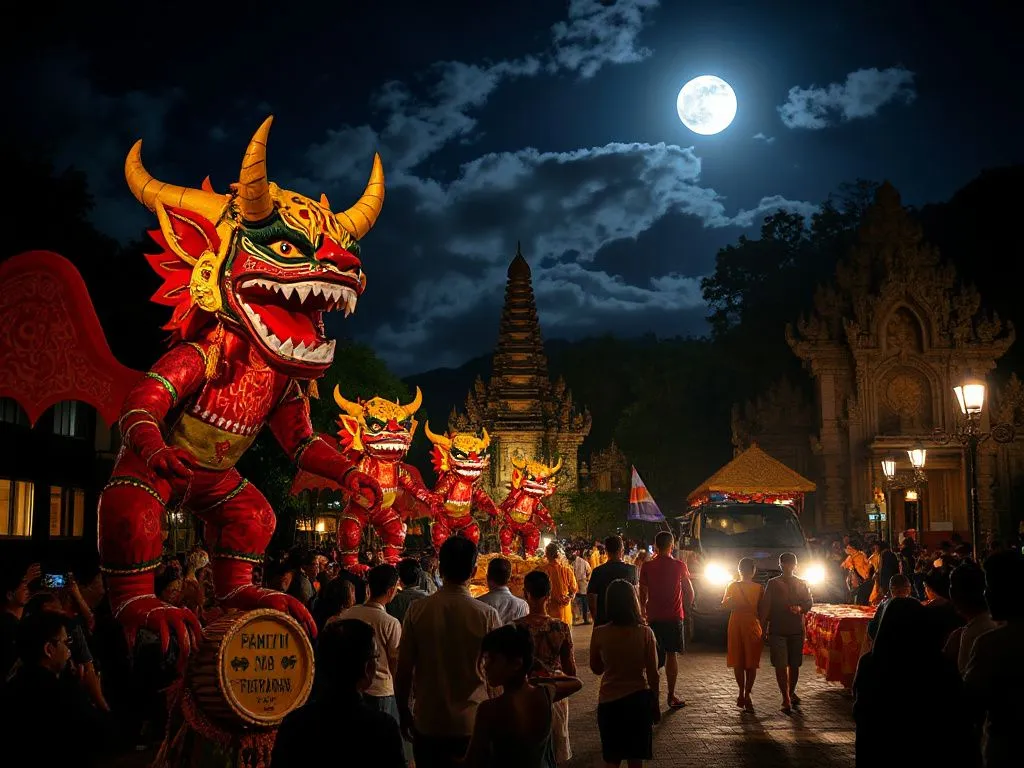
After sunset in Bali, a quieter magic takes hold. Beyond beach clubs lies a deeper spiritual life—Ogoh-Ogoh parades and Purnama cleansing ceremonies—offering visitors rare access to living tradition. As darkness settles, incense rises, bells echo across rice fields, and moonlight washes shrines wrapped in black-and-white poleng cloth. Villages gather, generations together, for rituals that feel timeless yet immediate. These are not staged shows but community practices where guests are welcomed as respectful observers—and sometimes, invited participants.
The Allure of Bali’s Night Traditions
Bali’s night traditions—especially the fiery Ogoh-Ogoh parades and tranquil Purnama cleansings—reveal the island’s spiritual depth. They blend spectacle with reflection, balancing sound and silence, firelight and starlight. Rooted in calendars and cosmology yet sustained by everyday people—artisans, youth groups, temple caretakers—these customs thrive through patient craft and shared devotion. For travelers, witnessing this harmony of creativity and reverence illuminates Bali’s famed hospitality and enduring sense of balance.
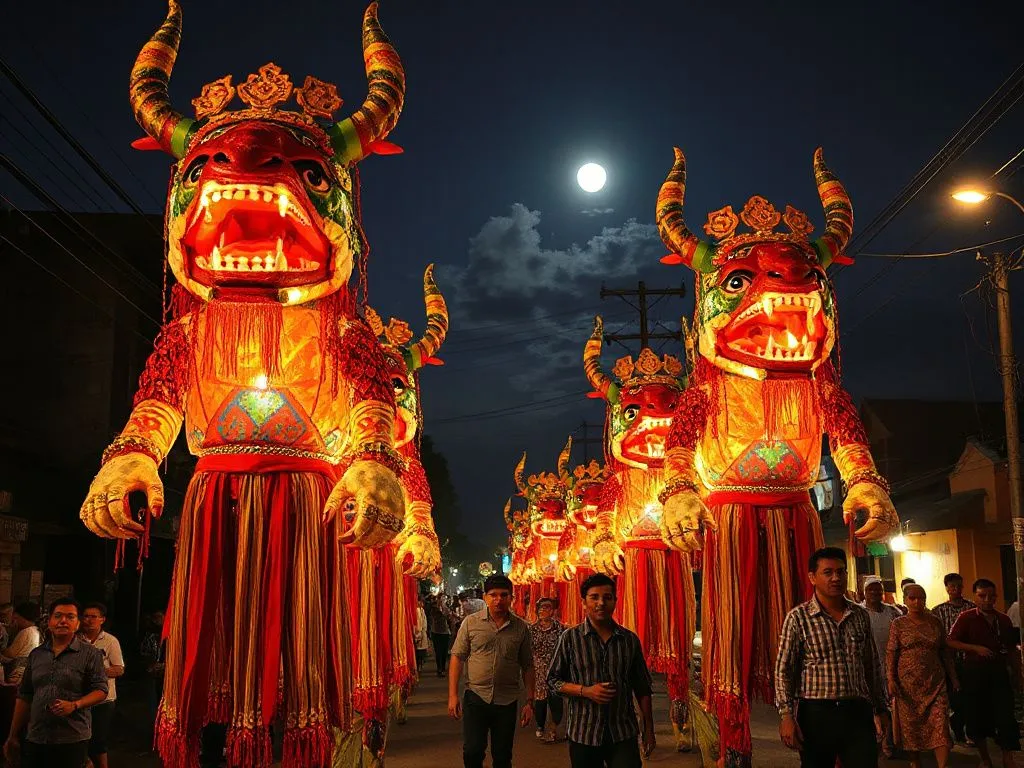
The Ogoh-Ogoh parades take place on the eve of Nyepi, the Balinese Day of Silence. Intricately crafted demon effigies are carried through the streets to chase away negative spirits, then symbolically purified, sometimes by fire. The raucous procession contrasts with the island-wide stillness that follows, highlighting chaos and calm in deliberate sequence. Months of preparation go into each effigy: bamboo frames, papier-mâché, vivid pigments, hair, fangs, and ornaments dramatize tales of disorder overcome by order. Youth groups (sekaa teruna) lead the effort, and parades weave through village crossroads—catus pata—where statues are shaken and spun to confuse malevolent forces. Some are burned to complete purification; others are kept to honor the artistry. Respect is essential: keep a considerate distance, follow local directions, and never touch the sculptures.
Understanding Melukat Ceremonies
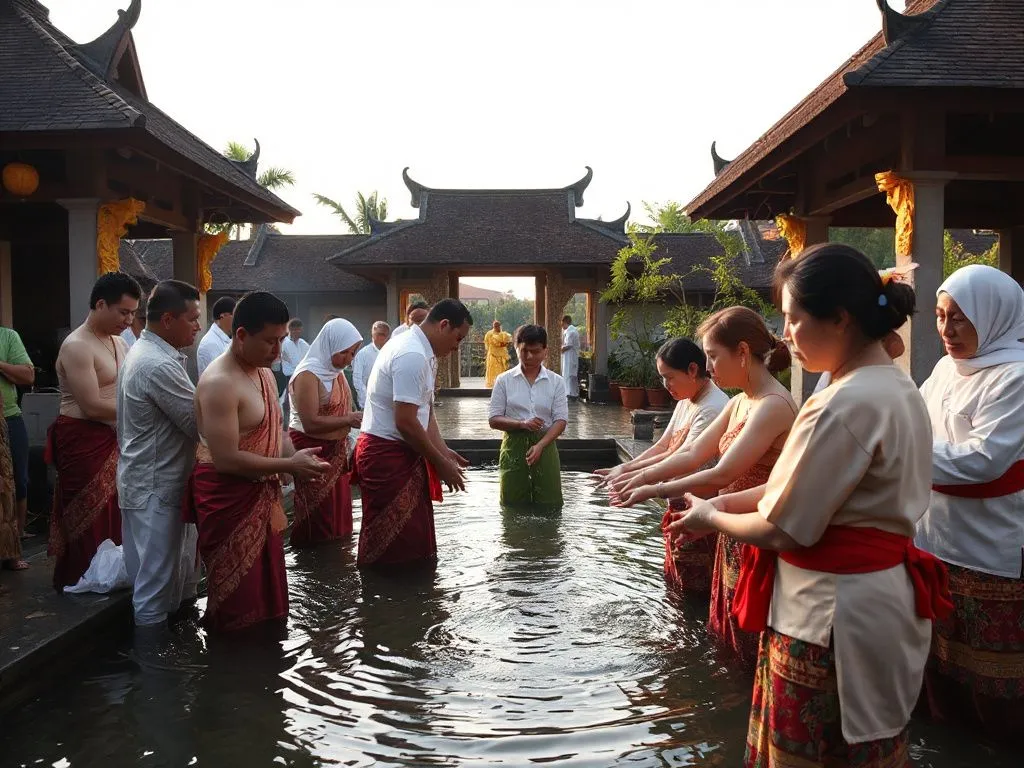
Melukat is a Balinese water purification that cleanses the spirit. Often timed with auspicious lunar phases like the full moon, it reflects the island’s cosmological rhythm. Sacred waters—tirta—are drawn from springs and temple fountains believed to carry divine energy; sites like Tirta Empul, Mengening, and Sebatu are well known. While Purnama (full moon) is popular, many also seek Melukat during Tilem (new moon), life transitions, or personal milestones to reset intention and release what no longer serves.
Guided by a Balinese priest, Melukat involves offerings, prayers, and sprinkling holy water as symbols of renewal ( ). Participants wear a sarong and sash, place simple offerings like canang sari, and bow in prayer as the pemangku chants mantras. Water is poured over the crown, face, and body; grains of rice (bija) may be placed on the forehead or throat to seal blessings, and a red-white-black thread bracelet can symbolize protection. If photography is permitted, keep it discreet and never disrupt prayer; always ask first. Though rooted in Balinese Hinduism, Melukat welcomes sincere seekers of all backgrounds who respect etiquette and the sanctity of the space.
Joining a Nighttime Tradition Tour
Joining these traditions can be transformative. Start by contacting local guides or platforms like iaminbali.com for custom, culturally sensitive experiences. Plan ahead—especially around Nyepi, when parades draw large crowds and logistics grow complex. Ask about group size, contributions to local temples, and how tours support community-led practices instead of staging events for visitors. Good hosts help arrange offerings, explain protocols, and time your visit so you witness meaningful moments without intruding.
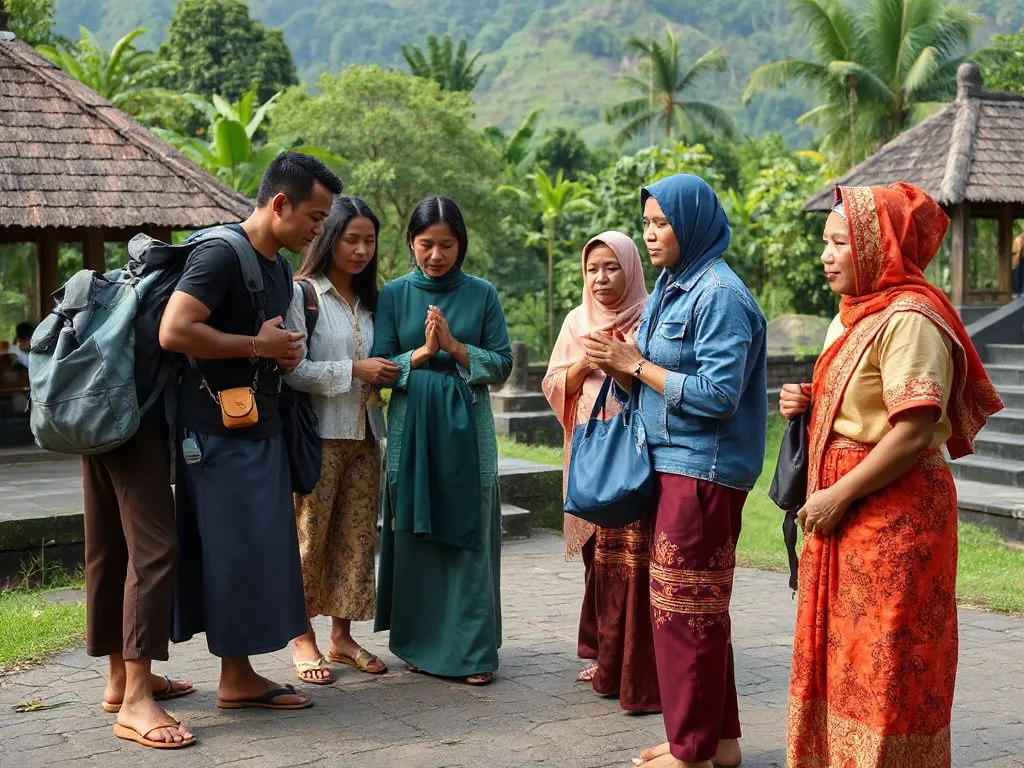
Dress modestly and approach with humility. At temples and sacred springs, cover shoulders, wear a sarong and sash, and remove shoes when required. Avoid stepping over offerings, keep voices low, and skip flash photography. A small donation (dana punia) is customary, and access to inner sanctums may be restricted unless invited. Women who are menstruating are generally asked to sit out temple visits, and everyone should follow the guidance of caretakers and elders. Simple phrases—greeting with “Om Swastiastu,” thanking with “Matur suksma”—build trust and show care.
How These Traditions Enrich Travel Experiences
Participating in Balinese nighttime rituals offers mental and spiritual benefits, connecting travelers to culture with a depth that sightseeing rarely reaches ( ). The steady gongs, scent of frangipani and incense, and the act of bowing invite a presence often missing in fast-paced travel. Standing shoulder to shoulder as a village moves in unison can soften the line between guest and host, encouraging attention, gratitude, and calm.
The dramatic Ogoh-Ogoh parade draws those fascinated by communal artistry and narratives of good versus evil, while Melukat and Purnama ceremonies offer quiet space for reflection. Nyepi’s island-wide pause—no travel, work, entertainment, or lights—amplifies the stars and the hum of nature. Many travelers embrace the stillness and wake with a sense of clarity. The arc from pre-Nyepi revelry to silence and the gentle return of daily life mirrors an inner cycle of release, stillness, and renewal.
Key Takeaways for Travelers
For travelers seeking more than sightseeing, Bali’s nighttime traditions open a world of spiritual heritage and vibrant expression. Whether captivated by Ogoh-Ogoh’s spectacle or the serenity of Melukat, these experiences leave a lasting impression. Plan with patience—ceremonies may start late and follow temple rhythms—and bring a light shawl for cool evenings near mountain springs. If your visit coincides with the Saka New Year (often March), you may witness the full Nyepi cycle; otherwise, full moon ceremonies occur year-round, offering many chances to connect meaningfully.
To explore these experiences, consider iaminbali.com for personalized itineraries and tours. Engage with care: approach humbly, contribute thoughtfully to local communities, and carry lessons of balance, patience, and gratitude beyond your trip. In doing so, you move past a checklist of sights and into a living relationship with Bali—one that deepens each time night falls and the island’s timeless rituals awaken.
Frequently Asked Questions
What are the Ogoh-Ogoh parades in Bali?
The Ogoh-Ogoh parades occur on the eve of Nyepi, featuring intricately crafted demon effigies carried through the streets to chase away negative spirits. These parades are a lively contrast to the stillness that follows, highlighting themes of chaos and calm.
What is the purpose of Melukat ceremonies?
Melukat is a Balinese water purification ritual aimed at cleansing the spirit, often performed during auspicious lunar phases. Participants engage in offerings, prayers, and the sprinkling of holy water to symbolize renewal and release.
How can travelers participate in Bali’s nighttime traditions?
Travelers can join nighttime traditions by contacting local guides for culturally sensitive experiences. It’s important to plan ahead, dress modestly, and follow local customs and protocols during these rituals.
What should visitors know about etiquette during Balinese rituals?
Visitors should dress modestly, avoid stepping over offerings, keep voices low, and respect the space’s sanctity. Simple greetings and expressions of gratitude can help build trust with the local community.
What are the benefits of experiencing Bali’s nighttime rituals?
Participating in these rituals connects travelers to Bali’s culture on a deeper level, offering mental and spiritual benefits. The atmosphere encourages presence, gratitude, and a sense of calm amidst the fast-paced travel experience.